
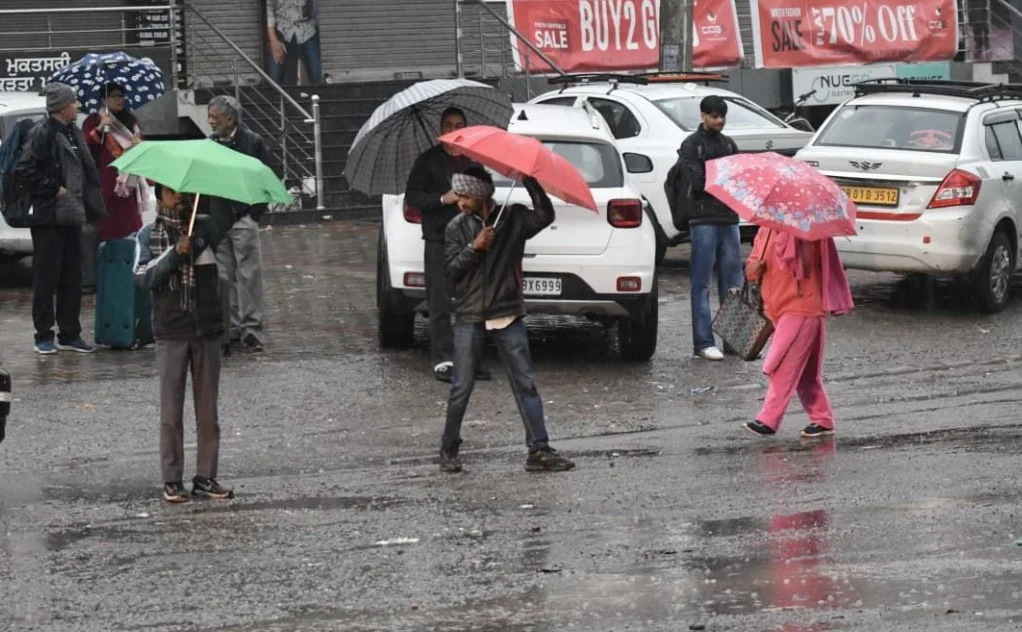
CHANDIGARH, June 22— The arrival of the annual southwest monsoon in Punjab and Chandigarh has faced a brief delay, leaving the region with a noticeable rainfall deficit during the initial weeks of June. Weather statistics released by the regional center revealed that Chandigarh recorded a 60 percent drop in seasonal moisture between June 1 and June 22, logging only 39.3 millimeters of precipitation against its historical average of 97.1 millimeters.
The deficit extends across neighboring territories, with Punjab experiencing a 25 percent shortfall after receiving 27.9 millimeters compared to its normal baseline of 31.9 millimeters. Haryana reported a relatively lower gap, experiencing a 16 percent deficit by recording 27.9 millimeters against its standard long-term average of 33 millimeters.
Climate researchers declared that a major factor behind the current delay is the global emergence of El Niño conditions along the South American coast. The administration affirmed that the warming of equatorial ocean waters has disrupted global wind and cloud movements, which frequently translates to weaker or delayed seasonal air currents over the Indian mainland.
“El Niño happens when warm water builds up along the coast of South America,” declared IMD Chandigarh Director Surender Paul. “This rise in ocean temperature changes the movement of air and clouds across the globe, which can disturb regular wind patterns. For India, this often results in a weak or delayed monsoon season.”
Despite the initial setback, the regional weather office stated that the main monsoon current is projected to reach Punjab and the union territory by the final days of June. The system is expected to stabilize over the border state before expanding deeper into the central and western districts of Haryana.
“The monsoon is currently delayed by three to four days and is expected to reach Chandigarh and Punjab by the end of June,” Surender Paul affirmed. “El-Nino conditions have set in and it can not only delay the monsoons but also weaken it.”
