
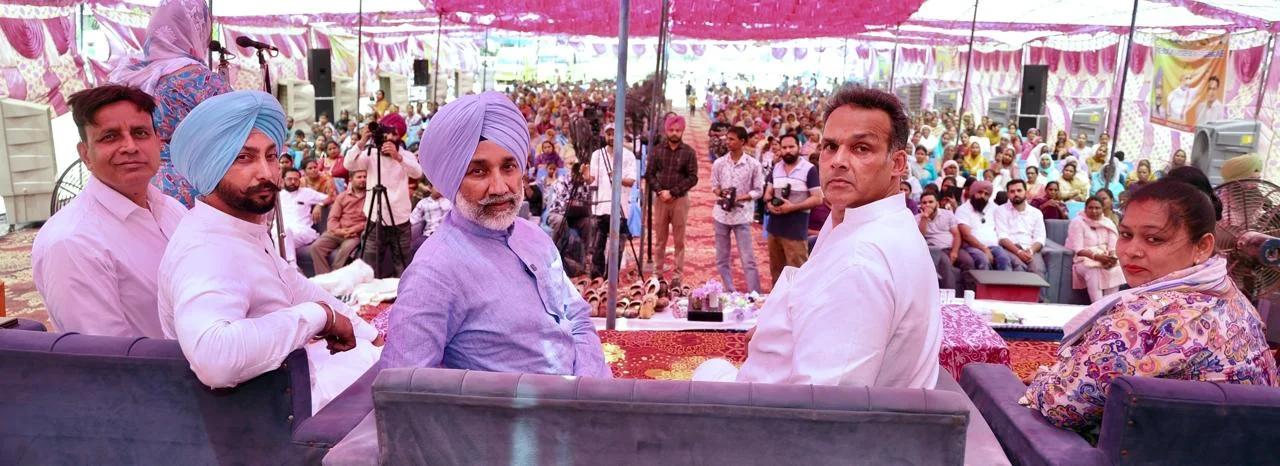
DERA BASSI, APRIL 26 — Rural prosperity in Punjab is undergoing a significant shift as self-help group members increasingly embrace technology and entrepreneurship through government-led schemes. MP Satnam Singh Sandhu, who interacted with beneficiaries of the “Lakhpati Didi” and “Drone Didi” programs, declared that the sustained success of these women is instrumental in strengthening the local economy.
Observing the diverse range of products—from traditional Phulkari and footwear to processed food items—the MP applauded the dedication of the local workforce. He stated that the government’s focus on providing market access and collateral-free credit has transformed the lives of thousands of women. Addressing the assembly, Mr. Sandhu asserted that the Union government’s initiatives have granted women not only economic stability but also a heightened social standing within their communities.
In response to requests from the women entrepreneurs, the MP announced a comprehensive plan to streamline their business operations. He stated that he would work closely with the Chandigarh administration to establish a “SHE Mart” retail outlet, providing a permanent platform for SHGs to market their products. Additionally, he pledged to organize a large-scale crafts mela at Chandigarh University to provide direct access to consumers.
The MP further declared that he would facilitate funds from his MPLAD allocation for a new Skill Training Centre in Dera Bassi. To ensure high-quality instruction, he offered the resources of Chandigarh University to train local educators, who will then provide vocational guidance to women in the region.
Reflecting on the progress made, beneficiaries shared their journeys of scaling home-based businesses into enterprises that provide employment for others. Entrepreneurs noted that these government programs have allowed them to expand their market reach, with many women now showcasing their work at national exhibitions. Mr. Sandhu concluded by reiterating that the state’s contribution to these initiatives remains vital to the broader goal of making rural women self-reliant participants in the nation’s growth.
