
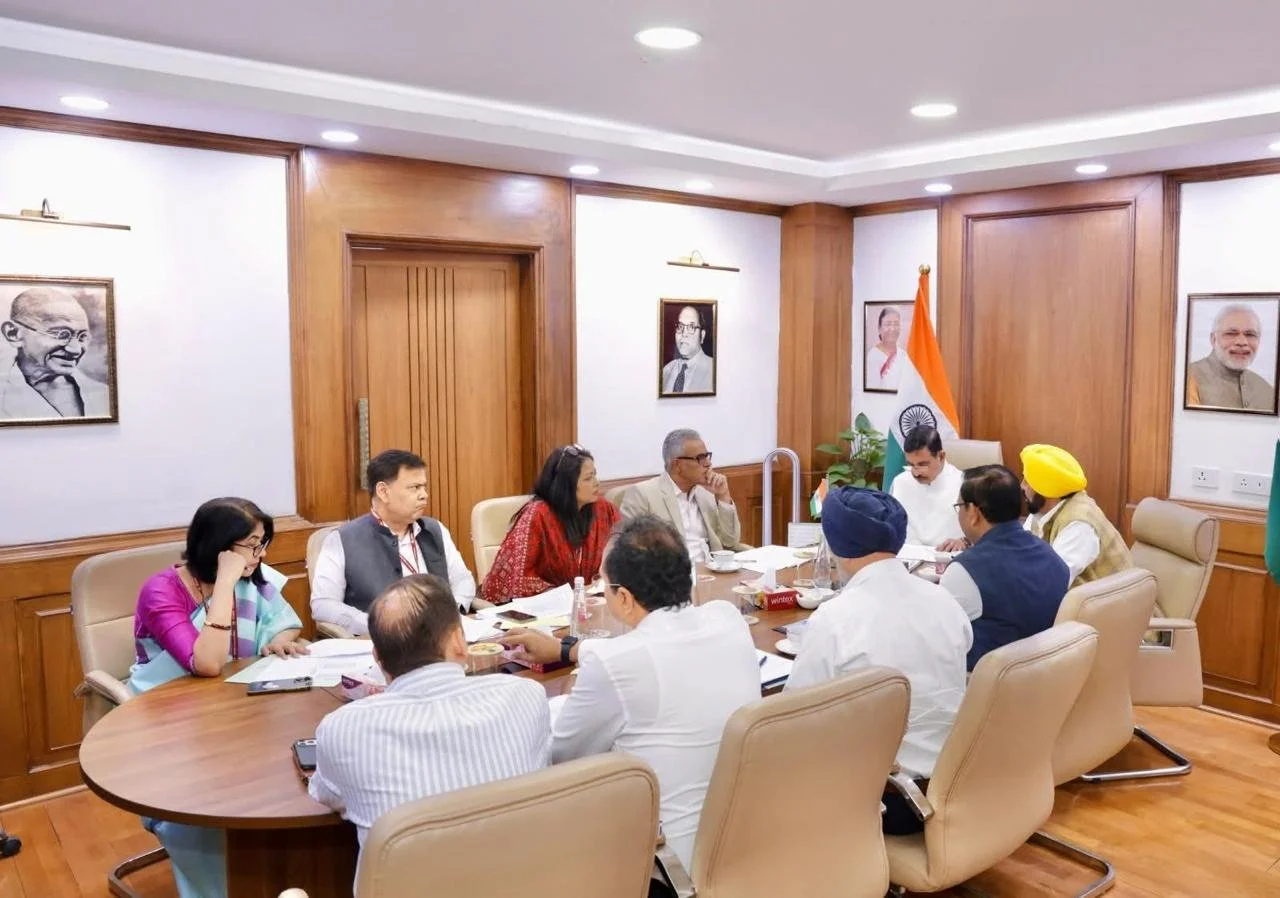
NEW DELHI/CHANDIGARH, APRIL 11— Punjab Chief Minister Bhagwant Singh Mann secured a commitment from the Centre on Friday to accelerate the lifting of 15.5 million metric tonnes of foodgrains from state godowns. The agreement aims to prevent a logistical bottleneck during the current wheat procurement cycle.
During discussions with Union Food Minister Pralhad Joshi, the Chief Minister sought an increase in the monthly evacuation of grain to 24 lakh metric tonnes, split evenly between wheat and rice. He stated that without this intervention, roughly 40 lakh metric tonnes of wheat would have to be stored in suboptimal conditions due to the lack of scientific storage space.
“I am pleased that the Union Minister has responded very positively to all these issues,” the Chief Minister affirmed following the session. He further noted that the state is committed to safeguarding the interests of its agricultural community and ensuring a smooth transition during the marketing season.
The meeting also delved into the grievances of commission agents, known as arhtiyas. Chief Minister Mann urged the federal government to review the recent marginal increase in commissions and instead fix the rate at 2.5% of the Minimum Support Price, as per state law. He maintained that the current fixed rates have led to significant dissatisfaction within the trading community.
Additionally, the Chief Minister requested federal assistance for farmers whose crops were recently damaged by hailstorms. He declared that a central team should be dispatched to assess the losses and provide necessary compensation. He also noted that the Food Corporation of India is currently withholding 30% of mandi labor charges due to EPF-related issues, a practice he stated lacks justification and places an unnecessary financial burden on state stakeholders.
