
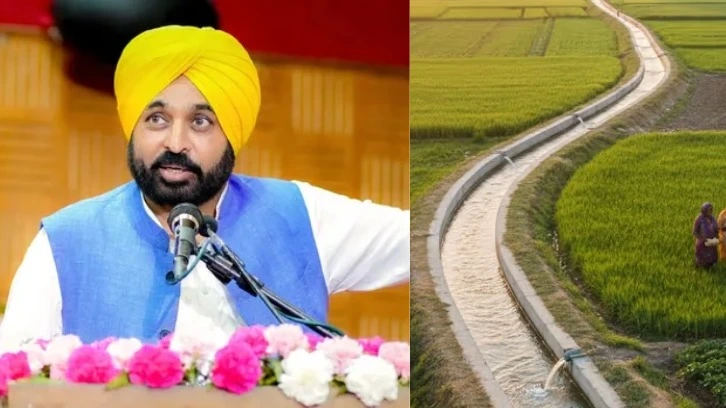
The long-term development, economic sovereignty, and environmental health of an agricultural region can never reach its full potential as long as cultivators are left dependent on depleting groundwater resources or erratic weather patterns. For decades, an unfortunate and quiet ecological crisis persisted across the state’s traditional farming belts, where distant tail-end fields were completely cut off from the historic canal network due to neglected watercourses, structural blockages, and an absence of comprehensive distribution planning.
This structural limitation forced thousands of smallholders to rely exclusively on expensive, diesel-powered tubewells, which drastically inflated their regular cultivation costs while accelerating a dangerous drop in the regional water table. The massive, systematic execution of the Canal Water to the Fields initiative directly reverses this historical decline, restoring the life-giving flow of natural river waters to the absolute farthest corners of the state’s fertile plains.
The immediate agricultural and financial revival driving this extensive water engineering campaign is clearly visible in the successful restoration and lining of thousands of kilometers of traditional watercourses. By clearing out decades of silt and constructing robust, concrete-reinforced channels, the administration has successfully ensured that natural gravity-fed river water reaches tail-end villages with maximum efficiency and zero transit loss.
This consistent, secure access to canal water has brought immense financial relief to rural households, immediately cutting down their regular electricity and fuel expenditures while significantly improving crop yields across both traditional and diversified agricultural sectors. The sight of long-dry channels filled with clean, flowing water serves as visual validation of a system that honors its foundational commitment to the agricultural community.
Furthermore, this sweeping infrastructure policy represents a deep, visionary investment in long-term environmental sustainability and generational wealth for the entire region. By reducing the farming sector’s heavy reliance on tubewell extraction, the initiative plays an indispensable role in stabilizing and recharging the state’s precious underground aquifers, protecting the natural ecosystem for future generations.
The equitable distribution framework managed through local water-user associations ensures absolute social harmony, guaranteeing that small-scale cultivators receive their fair, designated share of water resources alongside larger landholders.
This renewed resource stability gives families the confidence to explore advanced, sustainable crop rotations that enhance long-term soil health. Ultimately, this monumental infrastructure reform demonstrates that when an administration treats natural water distribution as a sacred public trust, it does far more than irrigate fields; it secures the economic future of its villages and builds a rock-solid foundation for lasting prosperity.
Read More: THE REVOLUTIONARY SIMPLICITY OF THE “EASY REGISTRY” SYSTEM
