
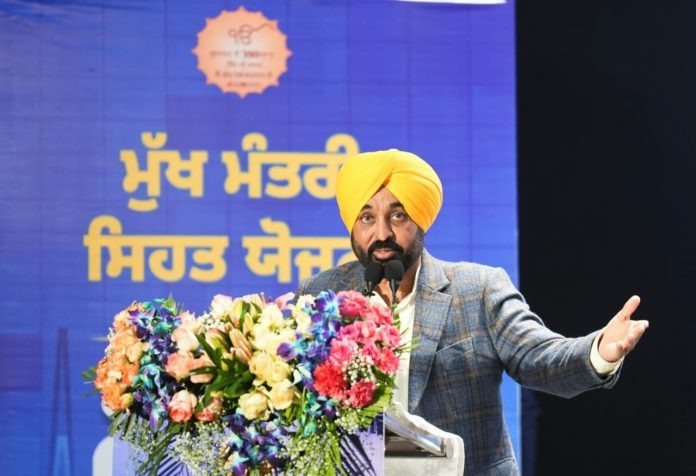
The deepest validation of a mature and truly empathetic governance model is found in its systemic determination to ensure that no family is ever forced to measure the value of a loved one’s life against their household financial liquidity. For generations, the unexpected onset of critical illness or specialized medical complications has lingered as a profound source of domestic vulnerability across communities, where the steep cost of private tertiary care could instantly unravel a lifetime of hard-earned economic stability.
The structural launch and subsequent universal expansion of the Mukh Mantri Sehat Yojana—historically rooted in the state’s flagship health insurance frameworks—represents a magnificent ethical evolution in public policy. By removing traditional, restrictive eligibility barriers like rigid income caps and professional category classifications, the administration has successfully transitioned public healthcare from a managed welfare charity into an absolute, dignified citizen entitlement accessible to every single household across the state.
The far-reaching impact of this universal transformation becomes deeply evident when examining the historic doubling of the annual cashless treatment ceiling to an unprecedented ten lakh rupees per family. This substantial fiscal extension directly addresses the heavy, inflationary pressures of modern medical sciences, providing an ironclad financial shield against complex, multi-stage procedures encompassing advanced cardiac interventions, intensive oncology treatments, neonatal emergencies, and chronic disease management.
By integrating more than 2,000 highly specialized clinical packages under a completely paperless framework administered across a vast network of hundreds of public and empanelled private institutions, the state has effectively democratized high-quality medicine. Families are no longer burdened by administrative complexities or forced into predatory high-interest debt cycles during moments of immense psychological trauma, as a simple verification through the unified health card grants immediate, cashless hospital admission.
Furthermore, this sweeping health umbrella acts as an indispensable stabilizer for the broader socio-economic health of the region, safeguarding nearly three crore individuals across approximately 65 lakh families. By expanding this protective net to automatically encompass contractual workers, regular government employees, pensioners, and general-category households who were previously excluded by narrow national criteria, the state has built a seamless foundation of collective security.
The deployment of smooth, digital verification systems via localized Sewa Kendras and specialized mobile platforms ensures absolute operational transparency while preserving the personal dignity of every applicant seeking card generation. Ultimately, this monumental health initiative proves that when public infrastructure places human health above fiscal conservatism, it creates an enduringly confident society where ordinary citizens can confidently pursue their dreams, fully secure in the knowledge that their health stands guarded by the state.
Read More: THE DEEP HUMAN COMPASSION DRIVING THE UNIVERSAL PILGRIMAGE SCHEME
