
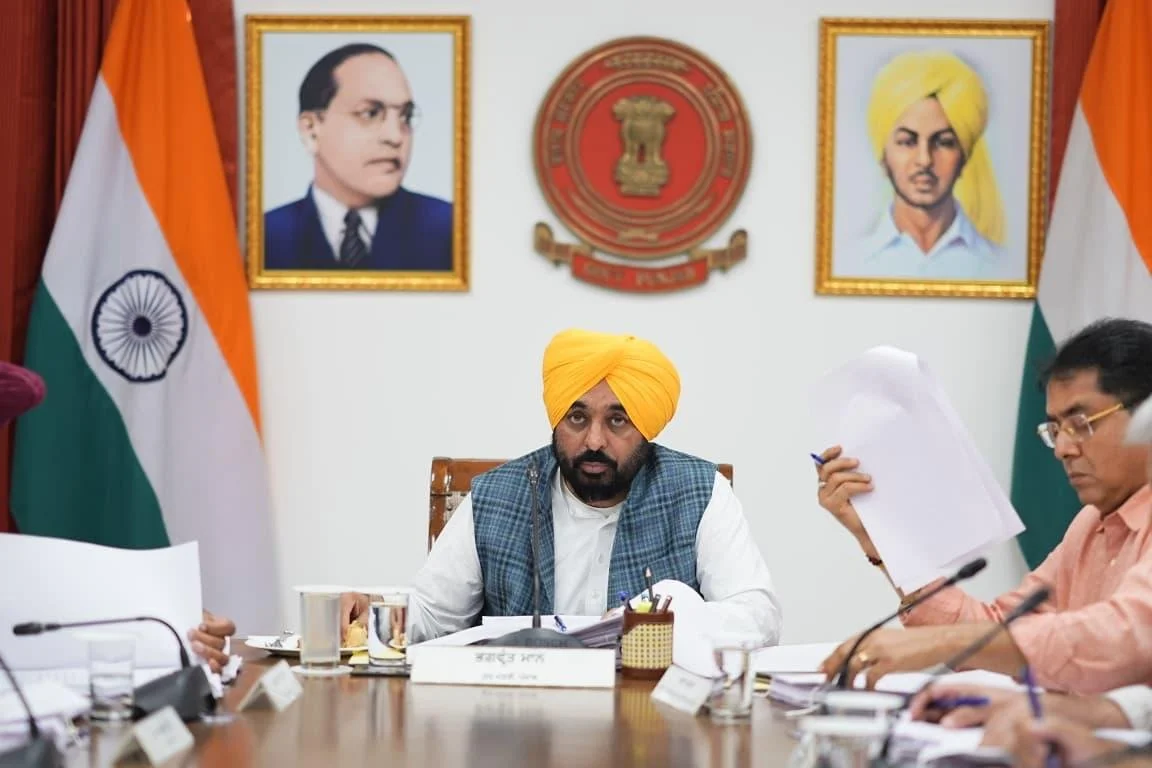
Chandigarh, June 11: The Punjab Cabinet has approved a series of public welfare measures, including free transit provisions for upcoming medical entrance candidates and substantial workforce recruitments across multiple departments. The decisions, approved during a ministerial session led by Chief Minister Bhagwant Singh Mann on Wednesday, target student assistance, employment creation, sustainable energy infrastructure, and industrial ease of operations.
Under the new directives, candidates appearing for the rescheduled National Eligibility cum Entrance Test undergraduate exam on June 21 can commute without charge alongside one guardian across Punjab and Chandigarh. State transport networks, including Punjab Roadways, PUNBUS, and PRTC, will honor student admit cards as valid transit passes from June 20 through June 22, with the operational expenses borne directly by the state exchequer.
The administration affirmed a strong commitment to public education by clearing the intake of one thousand and thirteen personnel into the school lecturer cadre. The executive body declared a one-time five-year relaxation in the upper age limit for these positions to accommodate a wider pool of qualified applicants and elevate teaching standards within government institutions.
The state executive also sanctioned the immediate recruitment of one hundred and fifty-six Junior Engineers to fill structural vacancies within the Public Works Department. The recruitment drive will be managed directly by the Punjab Subordinate Services Selection Board, dividing the intake between civil and electrical engineering professionals to ensure rigorous project supervision and execution quality across regional infrastructure developments.
The Cabinet maintained its focus on urban environmental upgrades by authorizing two major compressed biogas facilities in Patiala and Jalandhar under HPCL Renewable and Green Energy Limited. Designed to process one hundred tonnes of wet waste daily at each site, the projects aim to reduce local landfill dependency, mitigate methane emissions, and systematically process solid municipal waste into organic fertilizer and green fuel.
The session concluded with functional modifications to the Industrial and Business Development Policy, 2026, expanding specific fiscal incentives to established large-scale industrial units alongside existing small enterprises. The administration stated that these policy adjustments, which feature rewards for achieving ecological certifications, are designed to streamline corporate expansion and secure long-term investments for the state.
