
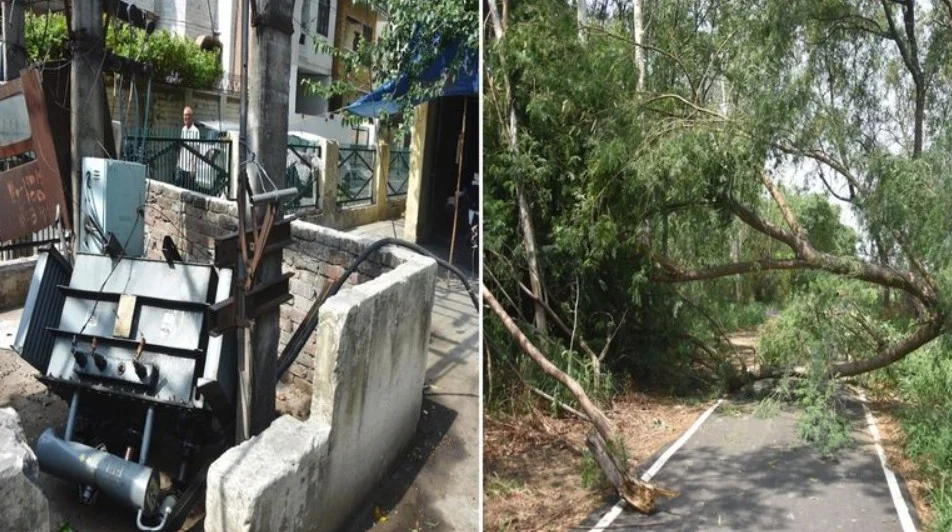
Chandigarh, June 13: Thunderstorms and powerful winds have severely damaged Punjab’s energy transmission network, creating a financial deficit of nearly Rs 19.54 crore for the state power corporation.
The severe weather system knocked out critical high-voltage assets, isolating entire residential pockets and forcing technical teams into emergency repair schedules. Operational data from the Punjab State Power Corporation Limited revealed that the storm systematically destroyed distribution equipment, particularly throughout the state’s central and border management territories.
The administrative impact extended beyond physical destruction, as the rapid cooling effect of the storm caused a dramatic reduction in electricity consumption across the territory. The sudden drop in power demand compelled system operations to reduce output at active thermal generation stations to prevent grid overload and ensure long-term stability.
Management personnel confirmed that repair teams worked continuously to clear fallen trees and replace damaged hardware across the affected transmission paths.
“Strong winds damaged 220-kV supply lines and transformers,” a senior PSPCL officer noted while detailing the response. “Our field staff have been working round the clock and have restored power supply in almost all affected areas.”
Power sector analysts stated that changing weather patterns have significantly increased the annual frequency of these disruptive storms over the past three years. While the sudden showers will temporarily lower the energy required for agricultural irrigation pumps during the upcoming cultivation cycle, the sheer scale of the damage—including over 1,400 ruined transformers and 220 kilometers of downed low-tension cables—has prompted calls for a comprehensive structural review to modernize the state’s energy infrastructure against climate volatility.
