
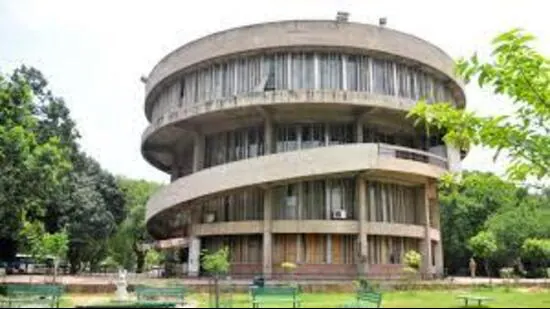
CHANDIGARH, Nov 9 – Panjab University will host the 11th edition of the India International Science Festival (IISF) from December 6 to 9, an event that will draw thousands of students, innovators, and scientists from across the nation to celebrate scientific progress and innovation.
Organised by the Union Ministry of Earth Sciences in partnership with the Departments of Science and Technology, Biotechnology, Space, and Atomic Energy, as well as the Council of Scientific and Industrial Research and Vijnana Bharati, the festival will focus this year on north-west India and the role of science in solving regional challenges.
At a curtain-raiser held on Saturday in PU’s Law Auditorium, dignitaries including Dr. M. Ravichandran, Secretary, Ministry of Earth Sciences; Dr. Suryachandra Rao, Director, Indian Institute of Tropical Meteorology, Pune; PU Vice-Chancellor Renu Vig; and former UT Adviser Dharam Pal, shared the event’s vision and objectives.
“This year’s festival focuses particularly on north-west India. We are exploring how science and technology can address challenges, including weather prediction, disaster management, and societal development for the region and the country,” said Dr. Ravichandran.
Highlighting the importance of inspiring youth, he said, “Science must be embodied among students in a practical and easy way.” He called on young minds to contribute to the vision of “Vigyan Se Samruddhi: For Aatmanirbhar Bharat.”
Dr. Ravichandran added that India was working towards a “Viksit Bharat by 2047” and that young innovators had a key role to play. “We are creating ecosystems that strengthen innovation and nurture scientific thinking,” he mentioned, noting that efforts were also underway to expand observing systems and improve weather forecasting.
PU Vice-Chancellor Renu Vig invited students across northern India to register at https://iisf2025.in and join what she described as a platform “to learn, share, and celebrate India’s scientific spirit.”
Dr. Rao outlined the festival’s theme and program, stating that it would highlight the country’s scientific achievements and foster collaboration between research institutions and innovators.
