
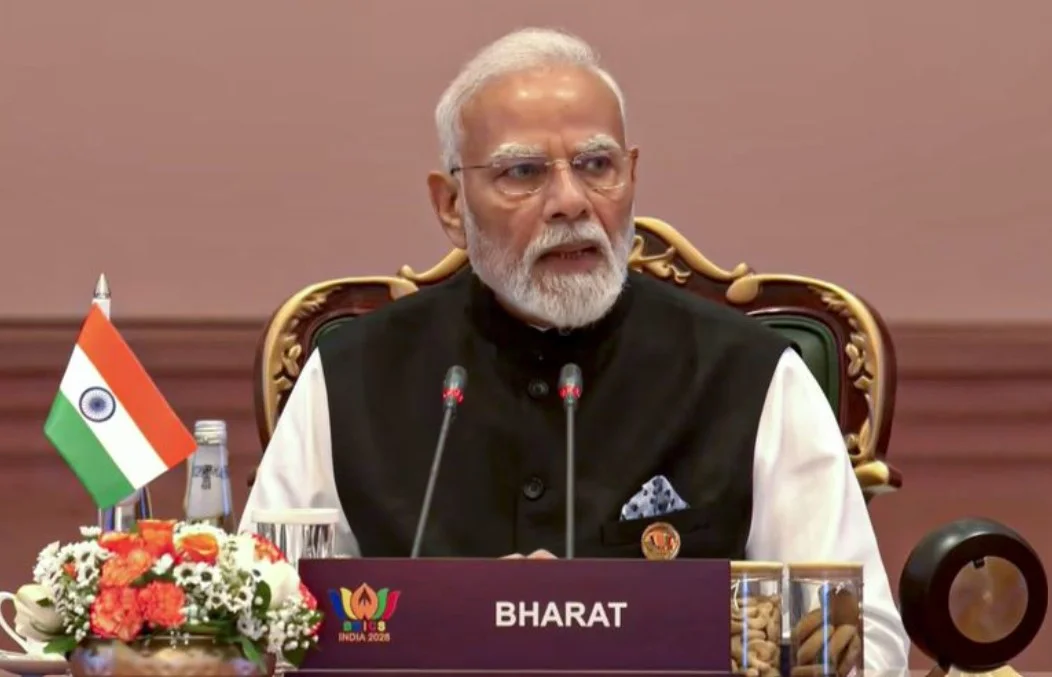
New Delhi, Sept 12: The BRICS grouping adopted the comprehensive New Delhi Declaration by full consensus on Saturday following extensive back-channel diplomacy led by Indian negotiators to resolve friction between Iran and the UAE. Announcing the breakthrough at the close of the summit’s first day, Prime Minister Narendra Modi maintained that the adopted document offers clear direction for collective growth and structural international reform. The successful agreement highlights India’s mediation role within the expanded eleven-member bloc, where unanimous consent is required for official declarations.
Addressing the assembled heads of state, Prime Minister Modi declared that developing economies across the Global South must transition from rule-followers to rule-shapers in global governance. He asserted that institutions established in the mid-twentieth century no longer suit contemporary global realities, emphasizing that delayed reforms in bodies like the UN Security Council perpetuate a concentration of authority at the top. He affirmed that BRICS remains an constructive, independent platform aimed at equitable multilateral participation rather than a bloc formed in opposition to any external alliance.
The inaugural day of the summit also featured key diplomatic exchanges among attending leaders, including direct discussions between Prime Minister Modi and Chinese President Xi Jinping. Both leaders met for dedicated bilateral talks on Saturday evening, with agenda items centered on strengthening bilateral trade, stabilizing regional commercial linkages, and advancing mutual investment priorities.
