
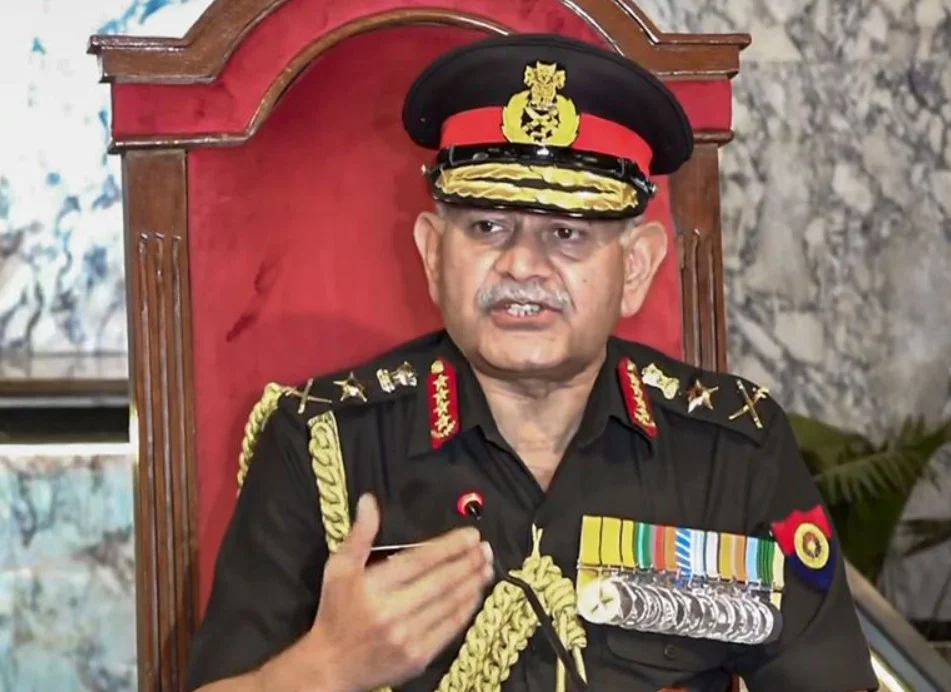
PUNE, MAY 30 — The Indian military is actively restructuring its operational strategies to counter high-velocity hybrid warfare threats across diverse operational fields, Chief of Army Staff General Upendra Dwivedi confirmed Saturday.
Speaking on the sidelines of the tri-services graduation event at Khadakwasla, Pune, the Army Chief stated that all three military branches are maintaining high readiness standards and optimizing collaborative systems to navigate complex contemporary conflicts. He noted that the transparent nature of current global battlefields means troop movements are continuously visible to opposing forces, necessitating extreme caution regarding strategic border deployments and civil protection plans.
“The Army is fully conscious of the changes in warfighting,” General Dwivedi stated, adding that modern security challenges do not always arrive in standard military uniforms or on clearly defined combat lines. He maintained that previous joint operations provided an absolute standard for how the state handles security provocations through integrated planning.
“Operation Sindoor demonstrated that and set the benchmark when national will was expressed with precision and resolve, defining how Bharat responds to provocation,” General Dwivedi stated, reminding the graduating class that sustaining this cooperative defense standard now falls to their generation.
The defense chief noted that artificial intelligence has become a critical factor in maintaining tactical advantages, particularly within the traditional Observe, Orient, Decide, and Act (OODA) cycle. He stated that the introduction of automated processing networks helps commanders accelerate complex decision-making during high-speed combat scenarios where multiple data points intersect.
To support this shift toward technological self-reliance, the defense structure has updated its educational methodologies. The academy’s instruction units have received heavy drone systems and modern training simulators to ensure that all graduating personnel maintain technical competency with counter-unmanned aerial vehicle platforms prior to active service.
The 150th passing-out parade marked the graduation of 355 officers destined for the Army, Navy, and Air Force. The reviewing officer noted that the growing integration of female cadets across the consecutive training terms reflects the changing institutional profile of the defense services, where personnel from all branches will continue to serve alongside one another within unified command structures.
